\
Enjoy Free Shipping on Orders Over $100 with Promo Code: FREESHIP*
*Offer Only Valid for Online Purchases. See Terns & Conditions for More Details.
Use Promo Code: MATTRESS10 to Save 10% Off Any Medical Mattress

Home Safety Tips For People With Dementia

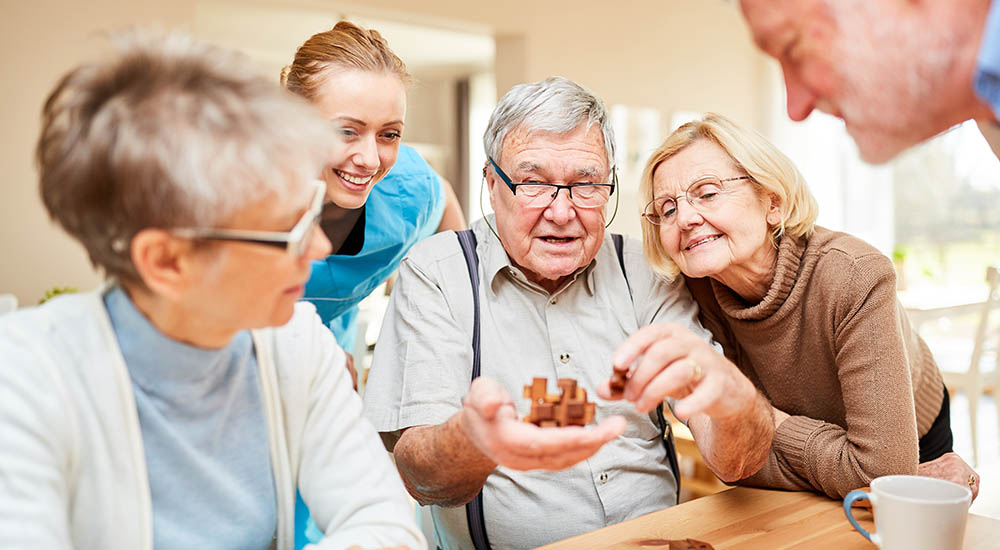
Home safety is important for everyone, but especially for people who have Alzheimer’s disease or other types of dementia. Over time, they may become less able to manage around the house.  For instance, they may forget to turn off the stove, slip in the shower or even wander outside. Loose rugs, dim lighting and clutter can lead to falls and they may not be able to call for help. It is usually more effective to change the person’s surroundings by removing dangerous items than to try to change their behaviors. 

To prevent stressful and dangerous situations, consider these home safety tips for caregivers. 


Living Room & Hallway

  • Check the floors. Remove any loose rugs that could lead to trips and falls. It is also important to seal carpet edges and seams that have become frayed. 
  • Light the way. Install night lights in the hallways to prevent falls and help the person get to the bathroom at night. Handrails may also be needed along the hallway.  
  • Be careful with candles and fireplaces. Do not leave the person with dementia alone with a burning candle or an open fire in the fireplace.  
  • Consider getting a lifting recliner. Some people with dementia have trouble standing up due to balance issues or limited mobility. It may be helpful to purchase the chair in the early stages of dementia so that it becomes a familiar object to the person. 
  • Protect stairways. Make sure that there is a sturdy handrail that goes all the way from the top to the bottom.  You might need to add non-skid strips if the steps are highly polished. Light switches should be installed at the top and bottom of stairs.

Bathroom

  • Install wall-mounted grab bars near the toilet, near the bathtub and in the shower.  They can help people with dementia keep their balance on wet, slippery floors. 
  • Get a shower chair with a handheld shower head so the person can remain seated while bathing to help prevent falls.  A bathtub/shower mat is also helpful. 
  • Consider getting a raised toilet seat with arms. It is much easier for people to use the toilet when the seat is elevated by 2” and they can use their arms to steady themselves. 
  • Lock up all medicines, vitamins and supplements. People with dementia often rummage through drawers and cabinets.  They may take someone else’s medicine or take too much of their own. 
  • Remove door locks from the bathroom doors to prevent the person from accidentally becoming locked in the bathroom and unable to get out. 

Kitchen

  • Prevent access to potentially dangerous appliances by installing safety knobs on the stove to prevent the person with dementia from turning the stove on or off. The garbage disposal may need to be disconnected as well. 
  • Lock up all toxic cleaning products, matches and alcohol.  Important papers, checkbooks, credit carts, and keys should also be kept secure as they could be misplaced or hidden by a person with dementia. 
  • Get appliances with automatic shut-off mechanisms. People with dementia often forget that they turned on the toaster, kettle or other appliance and a fire could result.  
  • Use good smoke detectors. People with Alzheimer’s often forget about food that is being cooked. Some newer smoke detectors can send alerts to your phone when you are not at home. 

Bedroom

  • Consider getting a Hi-Low bed. These beds can be lowered until the frame is just a few inches above the floor. They help protect people who try to get out of bed without asking for help.  Fall mats can also be placed next to the bed to provide a soft surface in case the person rolls off the mattress. 
  • Be careful with heating devices. Don’t use portable space heaters in the person’s bedroom. Remove electric blankets and hot water bottles that can be a safety hazard for a person with dementia.

Other Areas

  • Lower the water temperature. Set the thermostat on your hot water heater to below 120 F (49 C) to prevent accidental burns.  
  • Prevent access to the washer and dryer. The doors and lids should be kept closed and latched, and the knobs may be removed if necessary. People with dementia may try to wash disposable incontinence pads or add buckets of soap.
    • Check the locks. Consider getting a keyless entry lock for the front door in case the person with dementia locks you out.  This will also make it easier for paramedics to enter the home in case of emergency. 
    • Prepare for emergencies. Have the person’s medical history and current medication list ready along with contact information for all of the person’s doctors.  
  • Keep the poison control number (1-800-222-1222) by the phone.
  • Keep computer equipment out of the way. If you store valuable documents on your computer, protect the files with passwords and create backups.


Final Thoughts

Caregivers can do many things to make the home a safer place for someone with dementia. Simple precautions can help people with dementia maintain their independence and ease the stress of caregiving. Whenever possible, caregivers should involve the person with dementia in identifying problems and deciding on changes to their home. If you need help making changes to your home, enlist friends, a home safety professional or a community organization. Trying to find the right equipment can be a challenge so the HomeCare Hospital Beds team of experts is ready to help!   For more information, call us today at 877-414-0002 or email us at info@homecarehospitalbeds.com.

 **The information on this site is not intended or implied to be a substitute for professional medical advice. If you are having a severe and sudden change in physical or mental health, please call 911, contact a local emergency facility or consult with your doctor. Always seek the advice of your physician or other qualified healthcare provider, and never disregard the advice given because of information you have received from our website.**

Q&A for Common Questions About At-Home COVID-19 Tests

At-home COVID tests are a useful tool as the world braces for the latest surge in cases. They sacrifice some accuracy for speedy results, but they can help people make decisions about when to isolate themselves. At-home testing is used with social distancing, masks and hand-washing to control the spread of COVID infection. In this blog, we will look at when at-home COVID tests should be performed, how they differ from PCR tests, and what the results mean. 


Q: When should at-home COVID Tests be performed? 

If you are not sure if COVID might be the cause of your runny nose or sore throat, at-home testing is your first best option. You can also take an at-home test after being exposed to someone with COVID.  For best results, try to do the test 5 days afterward. Additionally, you can take a test before you gather with  people who live in or outside of your household.  This is important to help make sure that you don’t spread the virus to friends or loved ones.  Remember that at-home testing can be done regardless of COVID vaccination status!  


Q: Can At-Home COVID Tests detect the Omicron variant?

While PCR tests are the best for detecting COVID infection, they are in high demand and short supply.  Thankfully, at-home tests can detect all of the variants including Alpha, Delta and Omicron. However, they are less sensitive than PCR tests. This means that they can show negative results for people who actually have COVID. At-home COVID tests are most likely to be positive when people have symptoms.  


Q: What are the differences between At-Home and PCR COVID Tests?

Both at-home and PCR COVID tests use nasal swabs but otherwise they are quite different:  


At-Home Tests

PCR Test

  • Provides results within minutes but are less sensitive – higher risk of false negative result
  • More sensitive tests but results take 12 hours to 4 days – lower risk of false negative result
  • Tests for antigens – special proteins on the outside of the virus
  • Tests for tiny bits of genetic material – can detect even the slightest trace of virus
  • Provide most accurate results when someone has COVID symptoms
  • Better at detecting COVID in early infection and people with no symptoms


Q: Why do COVID PCR tests take so long? 

PCR testing is a multistep process that usually must be sent from the testing site to an outside lab. It can take up to 24 hours for labs to receive the specimens from the testing centers, especially in rural areas.  Each sample must then be mixed with special chemicals and analyzed in testing devices. Some labs have lots of staff and equipment so they can process tests more quickly than others.  But even for these labs, the backlog of tests grows during each COVID surge.  


Q: What should I do if my COVID Antigen Rapid Test is negative? 

A negative at-home COVID test result means that the test did not detect any virus but it does not rule out infection. You may want to repeat the test in a few days to help confirm that you are not infected.  This is especially true if you are still showing symptoms and expecting to be around other people.  If your test is negative but you have COVID symptoms, you should have a PCR test to be sure. 


Q: What should I do if my COVID Antigen Rapid Test is positive? 

A positive at-home test result means that the virus was detected, and you very likely have a COVID infection. You should stay home and isolate for at least five days or longer if you’re symptomatic, according to new recommendations from the CDC. You should immediately inform your doctor as well as any close contacts. The CDC recommends scheduling a PCR test within 48 hours to confirm the at-home test results. If this is not possible, you should notify your local health department so that they can track COVID-19 outbreaks in the community. 


Q: Why should I use the iHealth® COVID-19 Antigen Rapid Test? 

The iHealth COVID-19 Antigen Rapid Test is authorized by the FDA for use with people who are at least 2 years of age. You can do the test in the comfort of your own home and get results in just 15 minutes. The nasal swab is soft and highly absorbent so it only needs to be inserted about ½ inch into your nostril. The results are easy to read and they can be saved in a free iHeath Pass app for future reference. 


Q: iHealth® COVID-19 Antigen Rapid Test disclaimers

The iHealth COVID-19 Antigen Rapid Test was designed only for detection of SARS- CoV-2 (COVID-19) and not for any other viruses or infections. They are not PCR tests and they are not valid for travel. The test kits must be stored at temperatures of 36-84℉  (2-30℃) to maintain accuracy of the results. The iHealth COVID-19 Antigen Rapid Test was not approved by the FDA but was granted Emergency Use Authorization.


Important Note

If you are currently experiencing COVID-19 symptoms, please contact your healthcare provider for immediate guidance. The information on this site is not intended or implied to be a substitute for professional medical advice. If you are having a severe and sudden change in physical or mental health, please call 911, contact a local emergency facility or consult with your doctor. Always seek the advice of your physician or other qualified healthcare provider, and never disregard the advice given because of information you have received from our website.