





\
Enjoy Free Shipping on Orders Over $100 with Promo Code: FREESHIP*
*Offer Only Valid for Online Purchases. See Terns & Conditions for More Details.
Use Promo Code: MATTRESS10 to Save 10% Off Any Medical Mattress

FSA, HSA & HRA Comparison and Differences
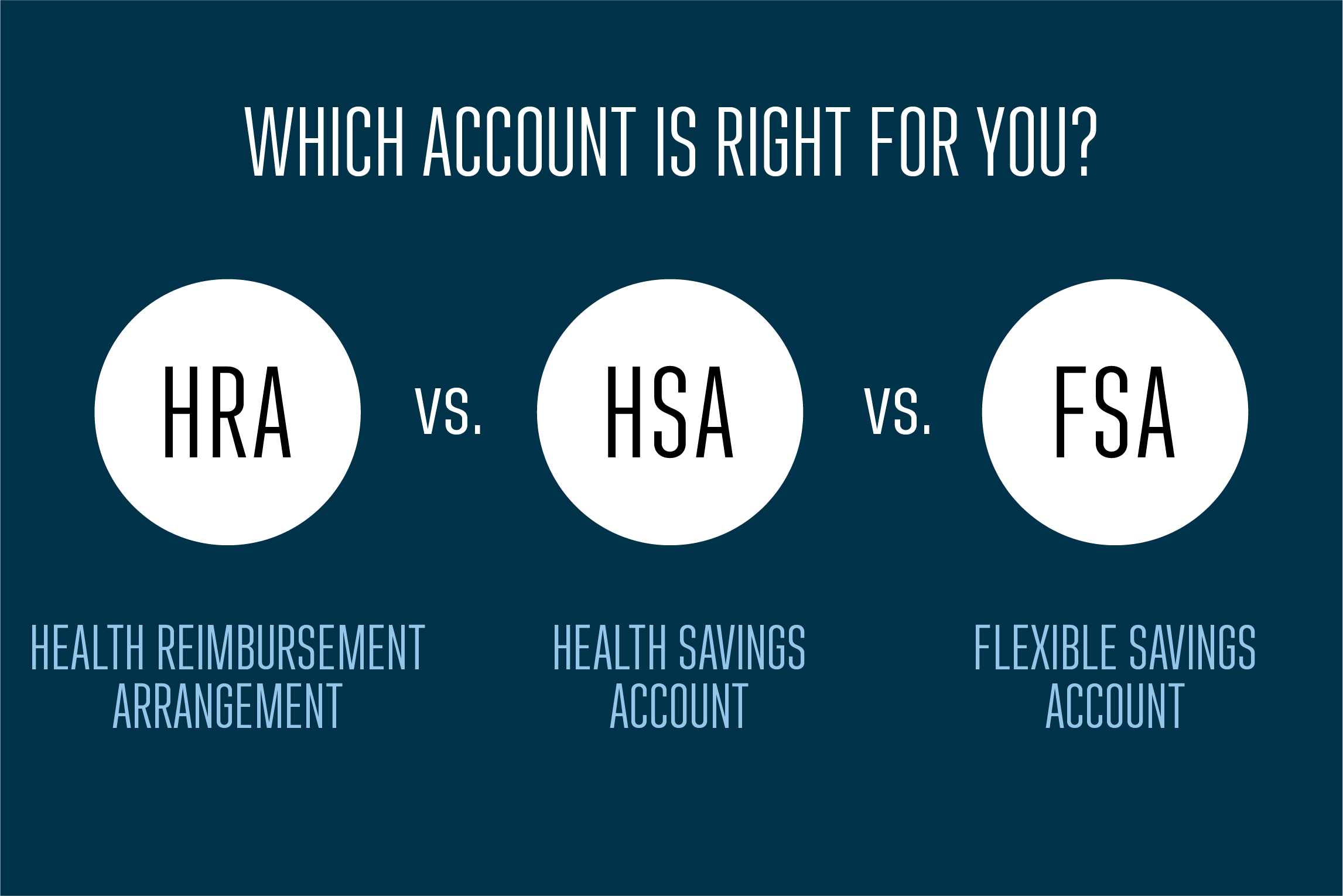
Health Reimbursement Accounts (HRAs), Health Savings Accounts (HSAs), and Flexible Spending Accounts (FSAs) can be great cost-savings tools. FSA and HSA accounts are funded by individuals while employers fund HRA accounts. These accounts allow money to be set aside on a pre-tax basis to pay for qualified medical expenses such as deductibles, prescriptions, and equipment/supplies.  People do not have to pay taxes on the money that they put into their FSA and HSA accounts. They can also choose from a wider range of options when selecting personal medical equipment.

Flexible Spending Accounts (FSAs)

FSA accounts are set up and owned by employers; they come only as part of a benefits package and employees cannot start FSA accounts on their own. Some employers may decide to contribute to their employees’ FSA accounts but it is not required. The IRS limits the amount of money that employers can put into their FSA accounts. One person can have up to $2,750 per year and a family can have up to $5,300 per year. Money for an FSA account is deducted from each paycheck before taxes. No tax must be paid when the funds are used to pay for qualified medical expenses.  This helps people save money on healthcare costs, especially because FSA accounts can be used with any type of health insurance. People cannot keep their FSA accounts when they change jobs and start working for a new employer.   

Health Savings Accounts (HSAs)

HSA accounts are set up by people with high deductible health plans (HDHP).  HDHP health insurance is relatively inexpensive due to high deductibles and copays.  HSA accounts allow people to set aside money to pay for medical costs if they arise.  People must meet certain criteria to qualify for an HSA account.  An HDHP must be the person’s only health insurance plan and the person must not be eligible for Medicare.  The person also cannot be claimed as a dependent on someone else’s tax return.

People may use pre-tax payroll deductions or direct payments to fund HSA accounts. Like FSAs, no tax is paid when funds are used to pay qualified medical expenses. The IRS limits the amount of money that people can put into their HSA accounts.  One person can have up to $3,600 per year and a family can have up to $7,200 per year.  Any unused money in an HSA account will roll over to the next year.  There is no time limit for accessing HSA funds.  The money in an HSA account will accrue interest over time so some people save the funds to use during retirement.  Because HSA accounts are owned by the individual, they are kept for life regardless of job changes. 

Health Reimbursement Accounts (HRAs) 

HRA accounts are set up, owned, and funded by employers. HRA accounts are different from HSA and FSA accounts because they are paid for by employers rather than individuals.  The employer decides how much money will be added each year.  The employer also decides which medical expenses may be paid for by the HRA.  Some HRA accounts are designed to pay for dental and vision care that are not included in the company’s insurance plan.   People lose their HRA accounts when they change employers but sometimes funds are made available for retirement.  HRA accounts may be used with any type of health insurance, including HDHP plans and Medicare.  

FSA, HSA, and HRA Qualified Medical Expenses

People can use FSA, HSA, and HRA accounts to pay for many types of medical expenses.  The IRS determines which expenses are allowed for FSA and HSA accounts and the employer decides for HRA accounts.  Examples include: 


Allowed Not Allowed
Thermometers & Blood Pressure Monitors Contract Fees for Concierge Medical Practices
Hospital Beds & Mattresses Funeral Expenses
Shower Chairs & Bathroom Safety Aids Medicare Part A & B Premiums
Diabetes Testing Supplies Diabetes Testing Supplies
Wheelchairs, Walkers & Other Mobility Aids Babysitting for Healthy Infants & Children
Repair Costs for Medical Equipment Dancing & Swimming Lessons
Incontinence Supplies Warranties for Medical Equipment
Recliners with a Medical Diagnosis Union Dues
Shaving Club Memberships


FSA, HSA & HRA Comparison Chart

Flexible Spending Accounts
(FSAs)
Health Savings Accounts
(HSAs)
Health Reimbursement Accounts
(HRAs) 
Who owns the account? Employer Individual Individual
Who creates the account? Employer Individual Employer
Who puts $ into the account? Individual Individual Employer
Health Insurance Options Any High deductible only Any
Contribution Limits Up to $2,750 per Individual;
Up to $5,300 per Household
Up to $3,600 per Individual;
Up to $7,200 per Household
Determined by employer
Rollover Funds Any unused funds are lost with
job change or end of the year
Unused funds roll over to the
next year with no time limit
Determined by employer
Investment Options Cannot accrue interest Funds will grow with interest and
can be invested for retirement
Cannot accrue interest


How to Clean Up Accidents On a Mattress

Accidents happen from time to time.  It is important to know how to clean a wet mattress quickly and easily. Coffee or juice can be spilled on your mattress or rainwater from a leaky roof could get it wet. Pets and young children may wet the bed. Hurricanes or floods can leave the mattress soaking wet. Mattresses can become breeding grounds for mold, germs, and bed bugs if they remain wet for any period of time.  Acting quickly to dry the inner core will help reduce the damage and help salvage the mattress

How To Clean a Wet Mattress Easily after Spills and Accidents

Try to clean accidents while they are still fresh and wet. Water, juice, and coffee spills should be blotted dry right away with paper towels. They should be pressed down firmly to soak up any liquid that seeped under the mattress cover. Then a hairdryer should be waved over the wet area for 10-20 minutes.  The area should be allowed to cool completely before checking to ensure that it is dry.  

Urine spills are more likely to attract bugs and cause mold to grow inside the mattress.  These spills must be cleaned immediately to salvage the mattress.  After the bed linens are removed, paper towels should be used to absorb as much urine as possible.   Do not rub or scrub the wet area as this can push liquid further into the mattress. The next step is to neutralize the odor-causing bacteria that are present in urine. 

Mix equal parts white vinegar and water together and liberally spray the solution over the wet area of the mattress.  Vinegar is a natural disinfectant and it will help neutralize the urine smell.  As little liquid as possible should be used to clean an already-wet mattress.  Allow the solution to sit for 10-15 minutes and blot dry with more paper towels. 

Baking soda is then sprinkled over the entire soiled area to absorb liquids and neutralize odors.  The powder should sit for 8-10 hours to dry completely. Then it can be removed with the vacuum hose attachment.  The vinegar-baking soda process should be repeated if needed to remove any lingering odors or stains. If possible, the mattress should be exposed to sunlight and fresh air before replacing the bed linens. Ideally, the mattress should be propped on chairs to allow fresh air to circulate as much as possible. 

Diluted rubbing alcohol may be used instead of vinegar for the spray solution.  Strong chemicals such as bleach and ammonia should be avoided.  They will destroy memory foam and corrode mattress innerspring.  Lingering toxins from harsh chemicals can be harmful to your health. The upholstered mattress cover should never be removed for cleaning as it is not washable. This is how to clean a wet mattress the easiest way. But what if you are trying to clean dry urine stains out of a mattress?

Step-By-Step: Cleaning a Fresh Accident

  • Blot dry right away with paper towels
  • Press down firmly to soak up any liquid that seeped under the mattress cover.
  • A hairdryer should be waved over the wet area for 10-20 minutes.
  • Mix equal parts white vinegar and water together
    • Diluted Rubbing Alchohol can be substituted if you do not like the smell of Vinegar.
  • Liberally spray the solution over the wet area of the mattress.
    • As little liquid as possible should be used to clean an already-wet mattress.
  • Wait 10-15 minutes and blot dry with more paper towels. 
  • Baking soda is then sprinkled over the entire soiled area to absorb liquids and neutralize odors.
  • Wait 8-10 hours to dry completely.
  • Vacuum Powder up with hose attachment.

How to Clean Dried Urine Stains from a Mattress

Sometimes urine spills have dried before the cleaning process can begin.  Baking soda and vinegar can be used but hydrogen peroxide or borax are often needed to completely remove stains and odors.

Hydrogen peroxide is sprayed on the affected area and blotted dry with paper towels.  The solution is then allowed to air dry on the mattress. Peroxide can bleach or discolor some materials.  Borax is a chemical that is used in some detergents and cleaning products.  The soiled area is dampened with water and sprinkled with borax powder. A brush or cloth is used to rub the borax into a thin paste on the mattress surface.  Once the area is fully dry, the powder residue is removed with a vacuum.  Gloves should be worn when using borax. It can also irritate the eyes and cause health problems if inhaled. 

Removing Mold and Lingering Odors from Mattresses and Furniture

Scented deodorizing products mask unpleasant smells but do not neutralize odors or remove urine stains.  Generous amounts of undiluted vinegar can be sprayed onto the mattress if odors remain after cleaning. The vinegar should penetrate the mattress and sit for 10-20 minutes. Paper towels are then used to blot the area dry.  Baking soda can be sprinkled over the area to neutralize the smell of the vinegar.  The baking soda should be left on the mattress for 8-10 hours before being removed with a vacuum. 

Mold spreads very quickly and hides in the spaces within foam mattresses. Once the mold is visible on the surface of the mattress, there are probably much larger amounts within the inner core.  Cleaning mold from mattresses can release mold spores into the air and cause people to become sick from mold toxicity.  The best option is to replace the mattress.  

Professional cleaners may be able to restore mattresses that have become soiled. They may use hot steam or special high-power UV lights to kill germs and remove lingering odors.  Their services are expensive but may cost less than replacing the mattress. 

Conclusion

Wet mattresses can cause lingering odors and health threats if they are not cleaned and completely dried right away.  Spilled water and beverages can often be cleaned easily.  Bedwetting is more challenging because urine encourages mold growth and attracts bugs. Mattresses that become wet from groundwater floods or sewage problems should be discarded straight away.  Mattresses that remain wet for more than 48 hours are generally not salvageable. SaniSnooze offers a tool to help with bedwetting for all ages. Our Care Mattresses are 100% waterproof and encased in a vinyl membrane cover to ensure the mattress stays clean. Shop our Cloud Mattress for clean cooling comfort.